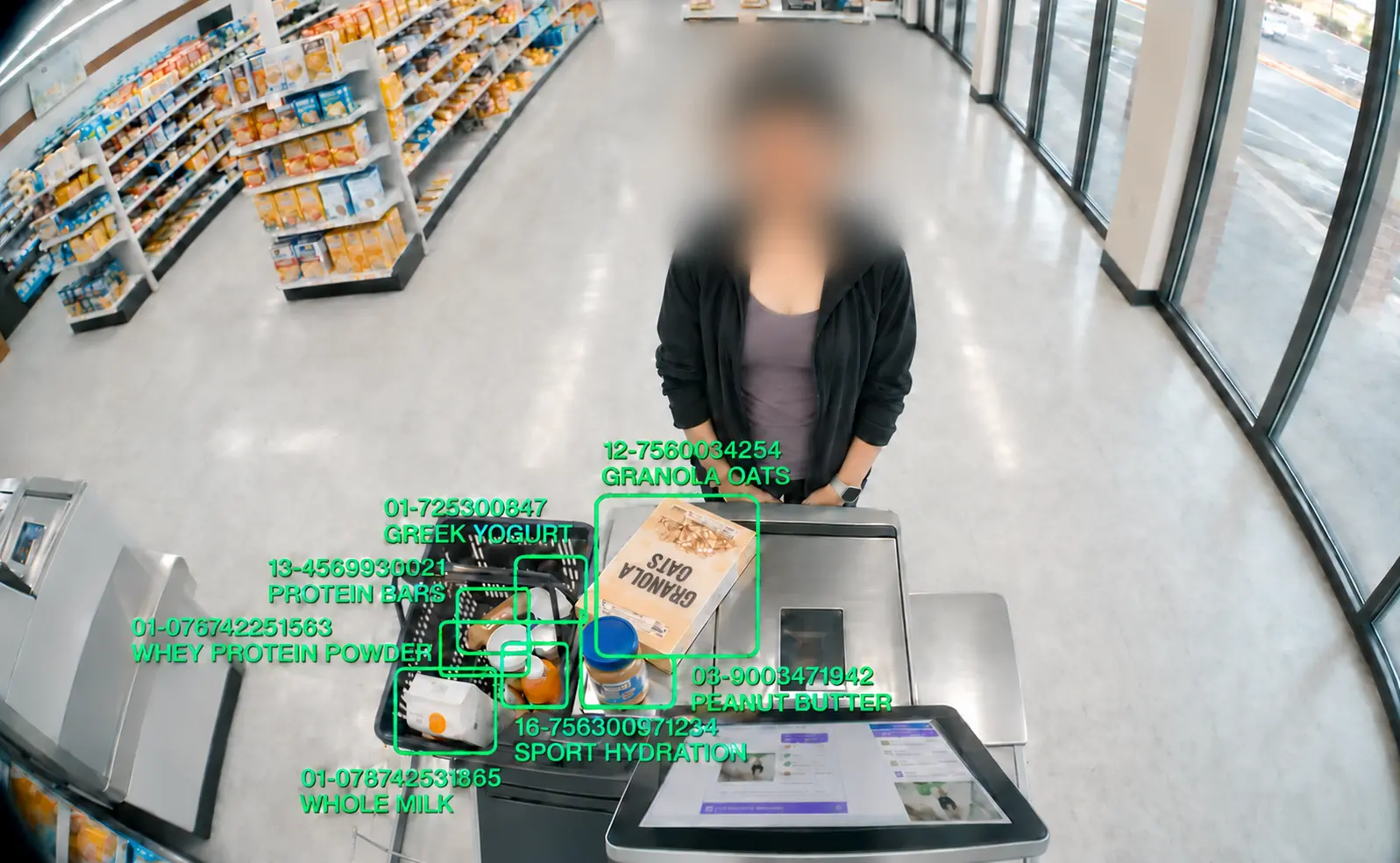
We don’t guess gestures. We know the item.
Today we are introducing ShopWatch - Shopic’s Vision AI product for self-checkout loss prevention.
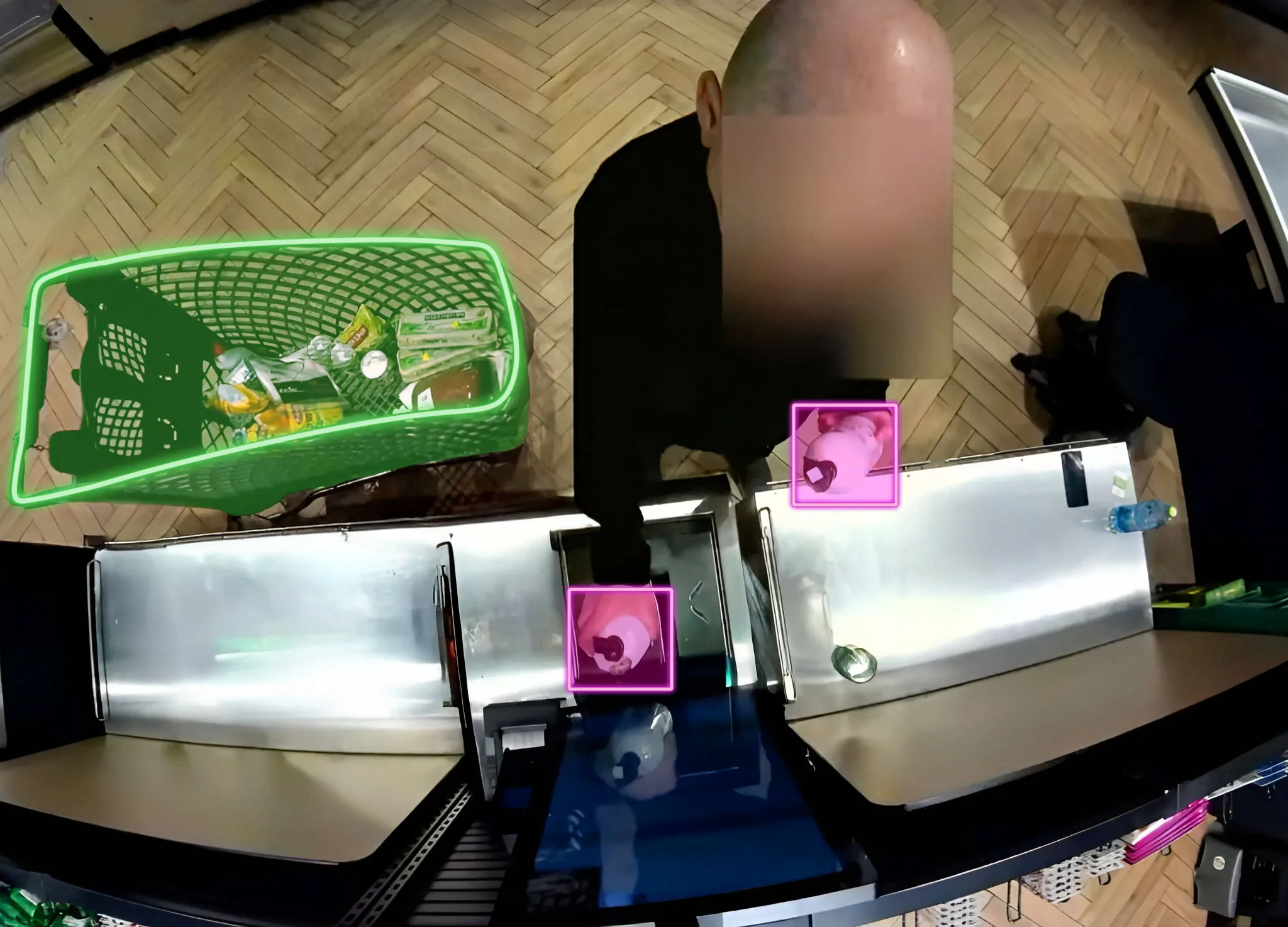
ShopWatch represents a categorical shift in how SCO loss prevention works. From gestures to items. From inferring what happened, to knowing what happened.
Where ShopWatch comes from
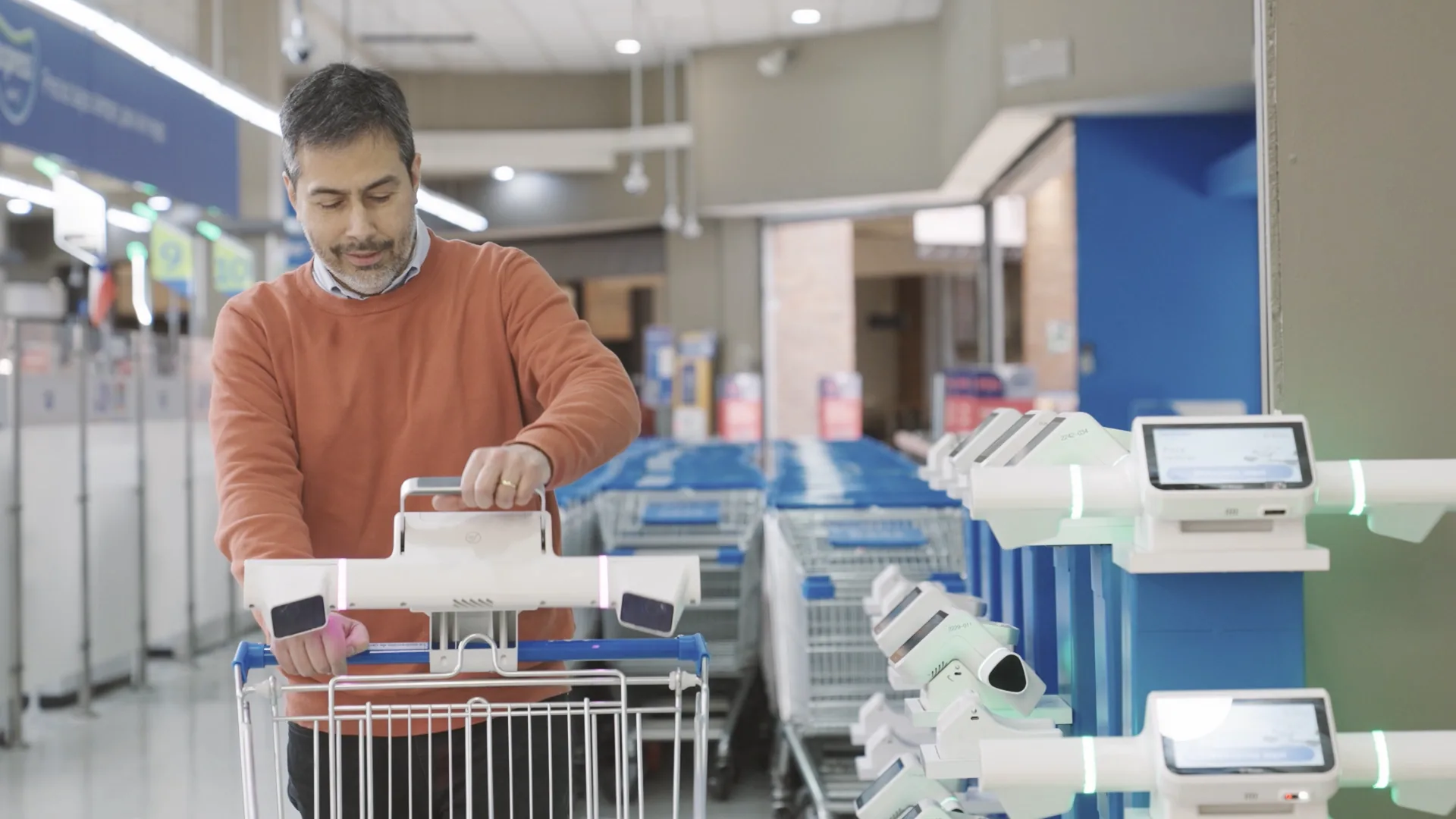
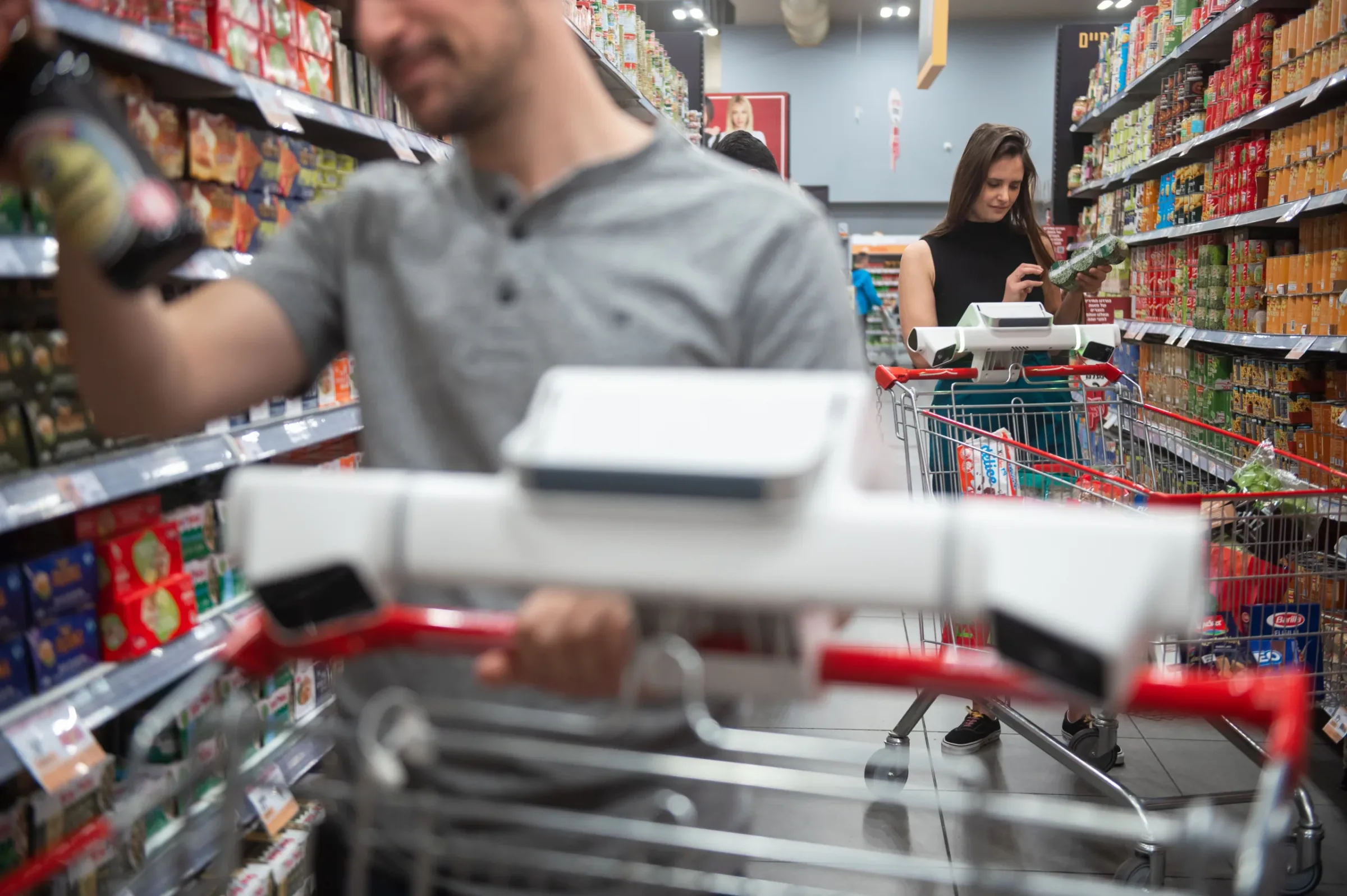
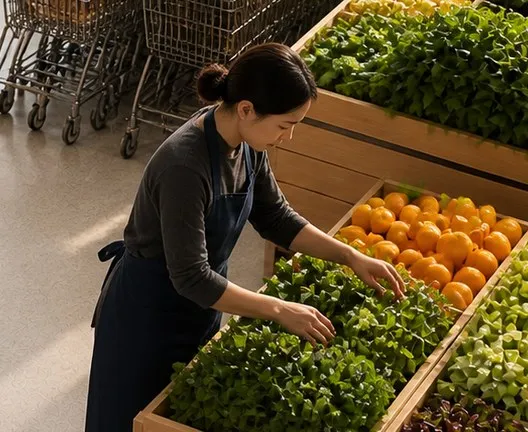
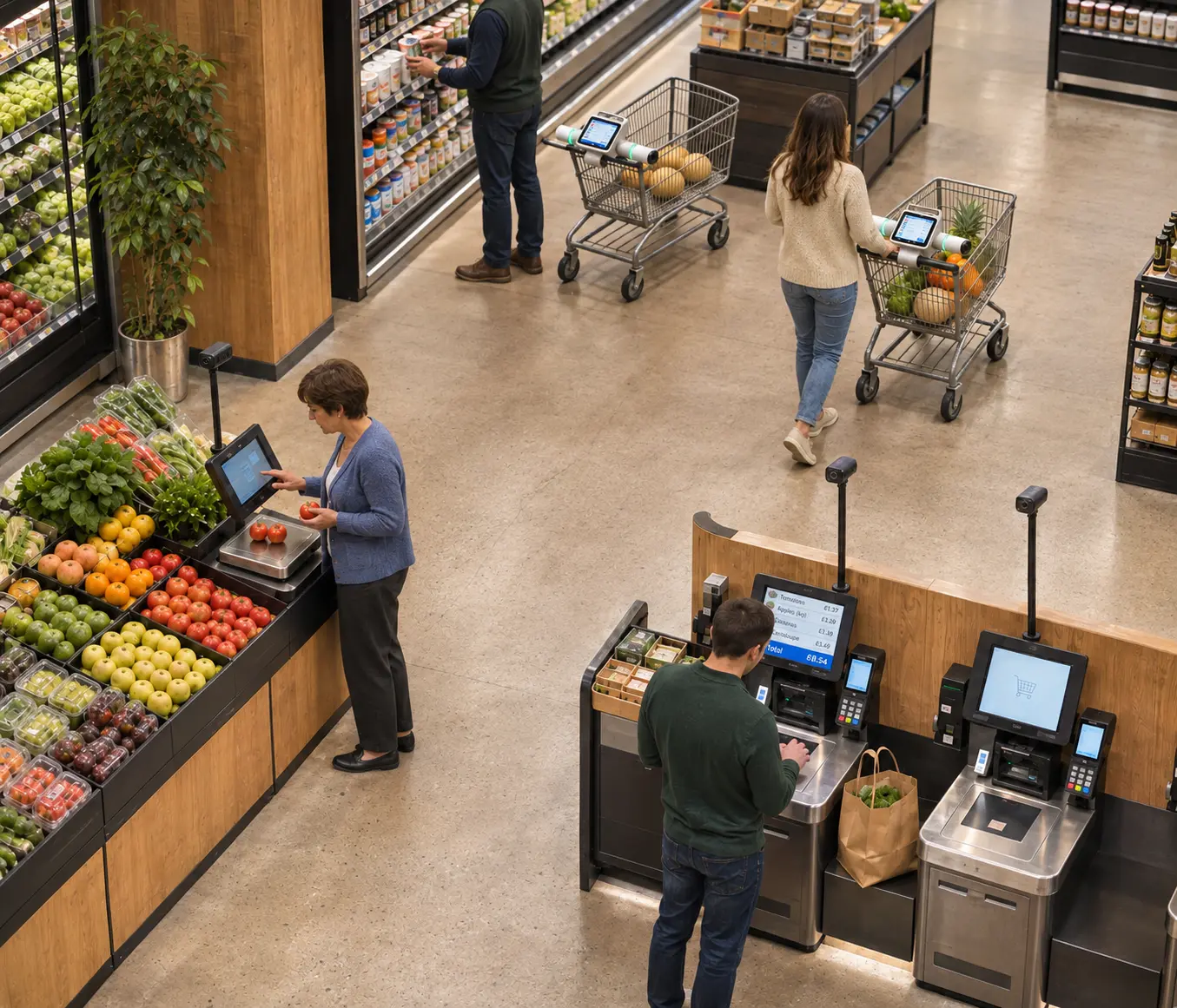
ShopWatch is the second product built on ShopicVision, our Vision AI platform for retail. The first was Smart Cart - an AI-powered shopping cart that recognizes items as shoppers add them to or remove them from the basket, with no barcode scanning required.
Deployed across grocery chains in Europe and the Americas, Smart Cart has trained our Vision AI engine on millions of real shopper transactions.
That same engine now runs at the self-checkout lane:
- Item-level recognition across catalogs of 100,000+ SKUs
- Edge processing with sub-100ms inference
- No store servers required
The product is different. The technology is proven.
The limit of gesture detection
Self-checkout loss prevention has been built on gesture detection for years. Cameras watch a shopper’s hands and arms. Rules infer whether something was scanned or skipped. An alert fires when the motion looks wrong.
The approach has a structural ceiling. Gestures can answer one question - did something happen - but not the questions that matter for the operator: what happened, to which item, by whom, with what intent.
Every gesture-based system carries the same trade-off. Turn up sensitivity and false alerts climb. Shoppers lose patience. Staff lose trust in the system, and stop responding to its alerts. Turn sensitivity down and shrink walks out the door.
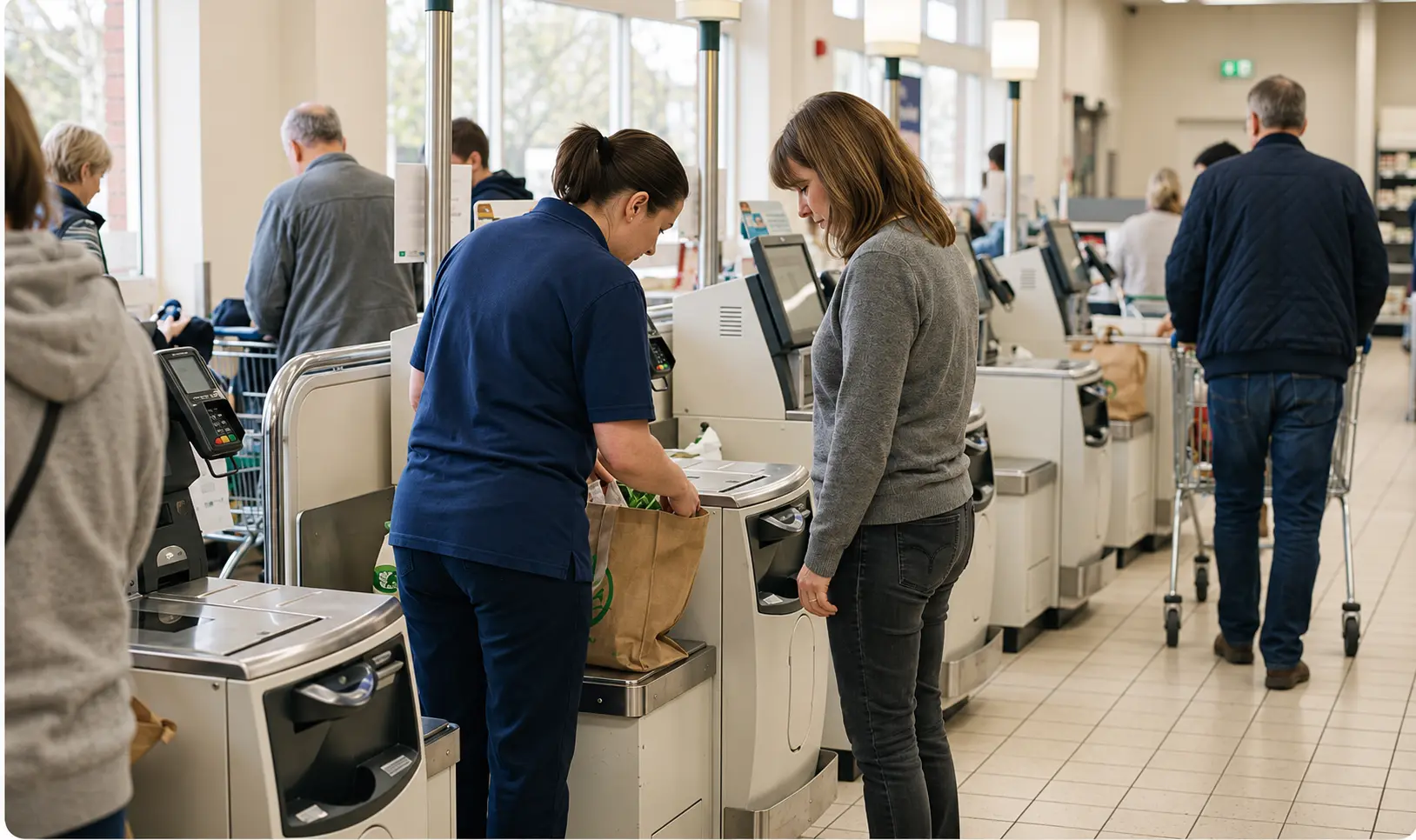
The ceiling is not an engineering problem. It is an information problem. No matter how sophisticated the rules or the model, gesture data answers only one question: was there motion that looks like theft? It cannot answer what the operator actually needs to know - which item, which shopper, what intent.
Better engineering on the same narrow input gives diminishing returns. That is why SCO loss prevention has not scaled at industry level. The bottleneck is the input, not the algorithm.
ShopWatch starts with the item
ShopWatch begins with item-level recognition. Every product passing through the SCO lane is identified by what it is, not by how it moves. The system distinguishes a $5 bottle of wine from a $50 bottle of wine - even when both are scanned at the cheaper price. That is the first answer: what.
The second answer comes from scene understanding. ShopWatch sees the full checkout area - people, carts, hands, items, in motion or at rest - and how they relate to one another in real time. Which shopper this is. Which cart belongs to them. Where each item came from, and where it ended up.
For example: when a shopper rearranges already-scanned items in their bagging area, the system understands the action and stays silent. When an item moves through the scanner zone without being scanned, the system catches it.
ShopWatch reasons about the entire scene, not a single moment of motion. That is how false alerts drop and how new shrink categories become visible.
What changes at the lane
For the operator, three things change:
- Capture goes up. More shrink seen, including ticket switches, mis-scans, and after-payment categories that gesture-based systems miss.
- False positives drop. The system understands the difference between honest shopper behavior and real risk.
- Interventions match the risk. Low-cost mistakes can be self-corrected by the shopper at the screen, some cases are flagged for review only at the end of the transaction, and high-severity events escalate to staff in real time.

The customer experience improves with the precision. The staff intervention bandwidth goes to the cases that actually need it.
Performance in production
In live deployments today, across multiple Tier-1 retailers around the world, ShopWatch is capturing around 70% of shrink events with false positives under 5% - against catalogs of over 50,000+ SKUs each. This is the real-world scale of grocery, not a controlled subset.
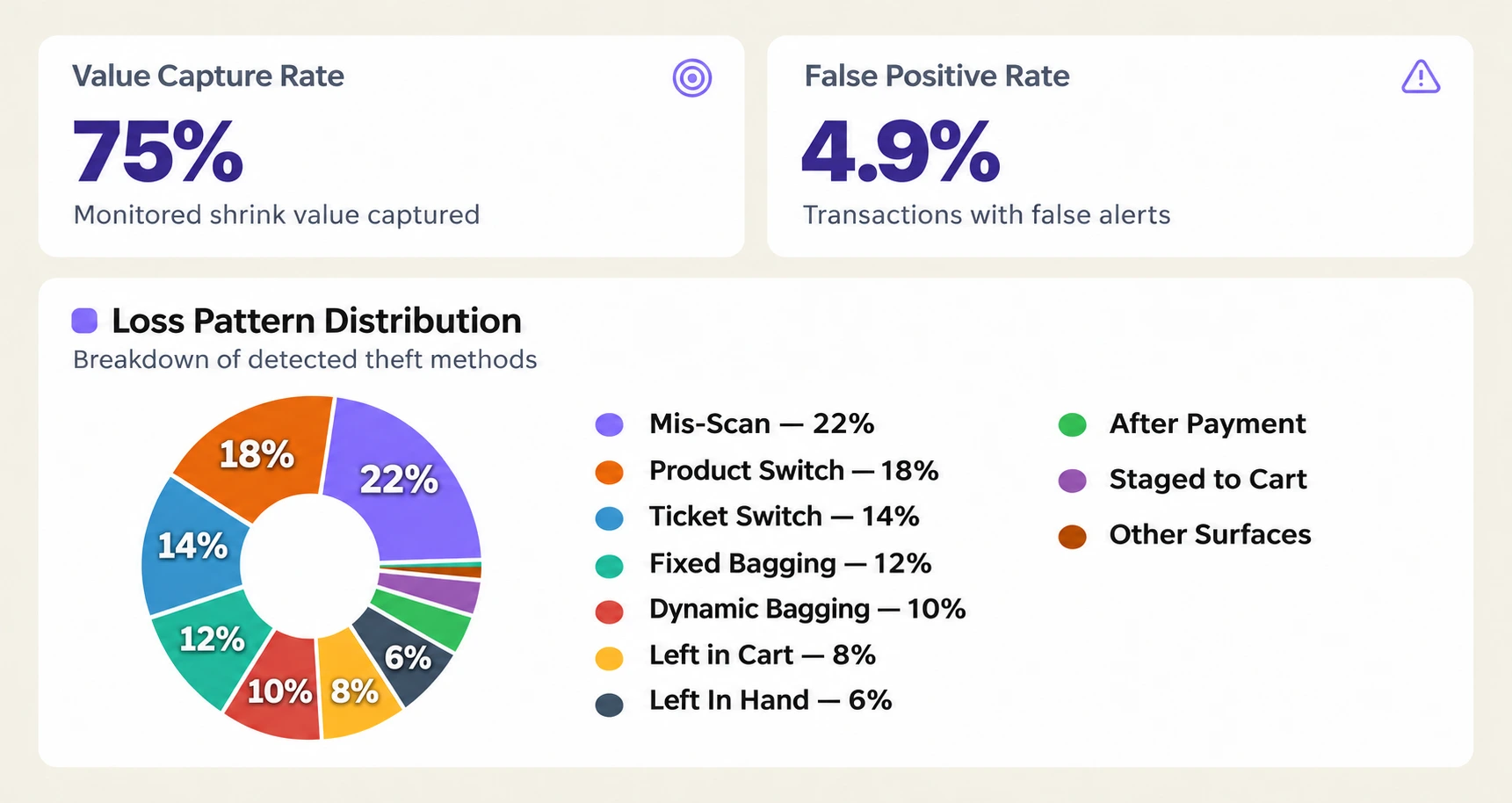
The industry has historically traded one against the other. More capture meant more false alerts. Fewer false alerts meant less capture. ShopWatch holds both.
ShopWatch is one product on a platform
ShopWatch is the second product on ShopicVision. It will not be the last.
Item-level recognition and scene understanding are platform infrastructure. The same engine that powers Smart Cart and ShopWatch will power shopper behavior analytics, store-level insights, and other applications and AI Agents we have not yet announced.
Every new deployment sharpens the underlying Vision AI models. Every new application improves every product on the platform. That compounding is what we are building.
The shift from inference to certainty is what makes loss prevention work at scale. ShopWatch is where that shift happens at the lane.